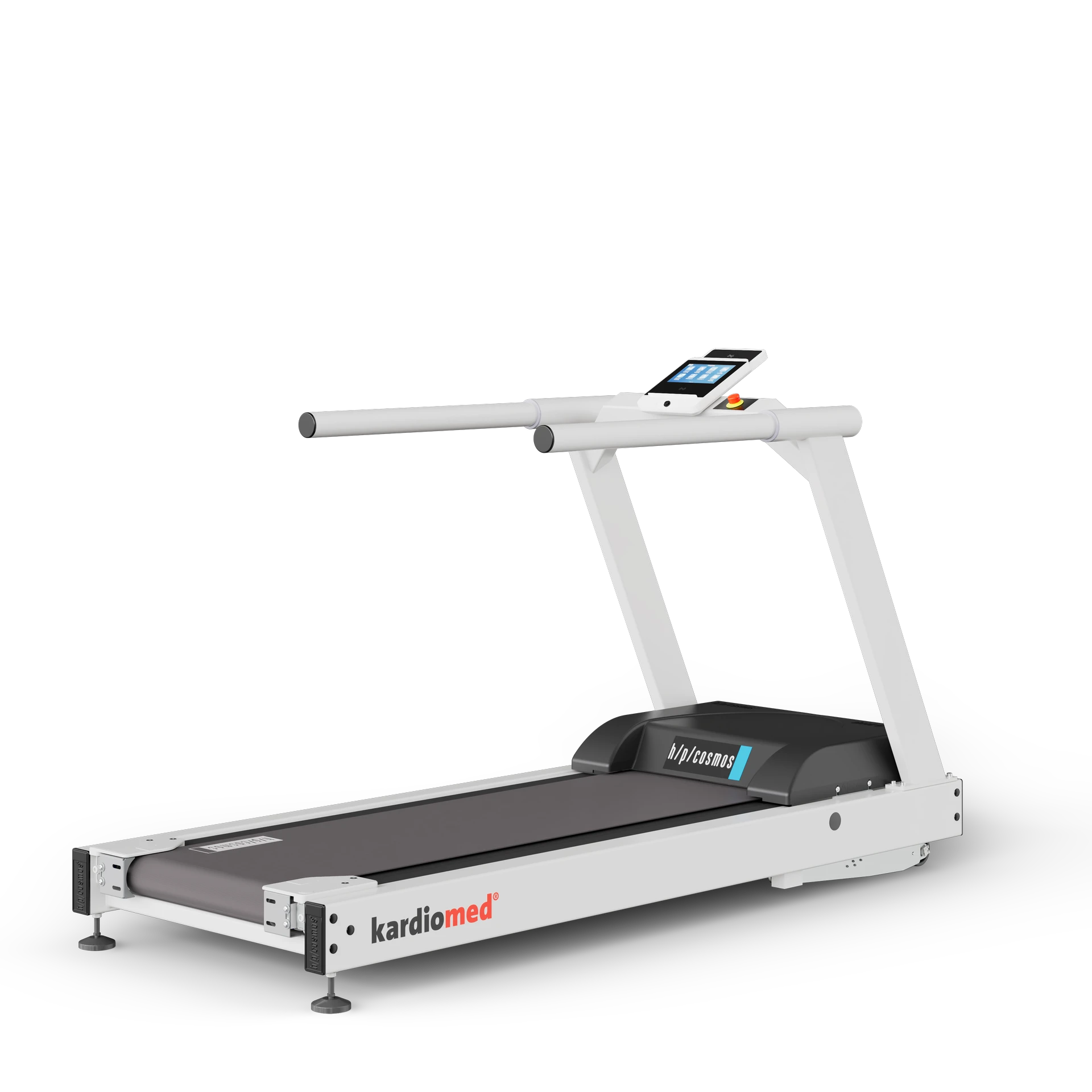

Effective movement control through the central nervous system and muscles
Coordination is a key factor in rehabilitation, therapeutic success, and performance enhancement. It describes the precise interaction between the central nervous system (CNS) and skeletal muscles during targeted movements.
There are two main types:
Note: In therapy, intra- and intermuscular coordination are considered not only in the context of power development, but also in the context of motor control.

Overview of training areas: Skills & training goals
| Balance | Stability, even under load – e.g. h/p/cosmos Perturbation Training |
| Reaction | Speed of response to stimuli, e.g., h/p/cosmos Perturbation Training |
| Differentiation | Fine-tuning of speed, strength, and distance, e.g. CON-TREX |
| Coupling | Implementation of complex movement sequences, e.g., cable pull compass MTT, h/p/cosmos |
| Adjustment | Adaptation to new situations, e.g., h/p/cosmos Perturbation Training |