
Gait rehabilitation and gait analysis
Targeted mobilization - walking safely: Mobility is quality of life. For people with orthopaedic and neurological impairments – such as degenerative joint disease, after trauma or surgery such as joint replacement or after a stroke, Parkinson's disease, MS and others – the ability to walk pain-free and safely again is one of the most important rehabilitation goals.
After surgical procedures such as cruciate ligament reconstruction, hip or knee prosthesis implantation, Achilles tendon ruptures or heel spur disorders, running therapy provides structured and early mobilization training. It helps to normalize movement patterns, avoid postural restraint and accelerate the recovery of everyday functions.
Neurological diseases pose different challenges: movement patterns can often no longer be controlled voluntarily due to central nervous damage. However, the brain has a remarkable ability to restructure - known as neuroplasticity. This makes it possible to create new neuronal connections through intensive, repetitive training and to relearn functions that were thought to be lost.
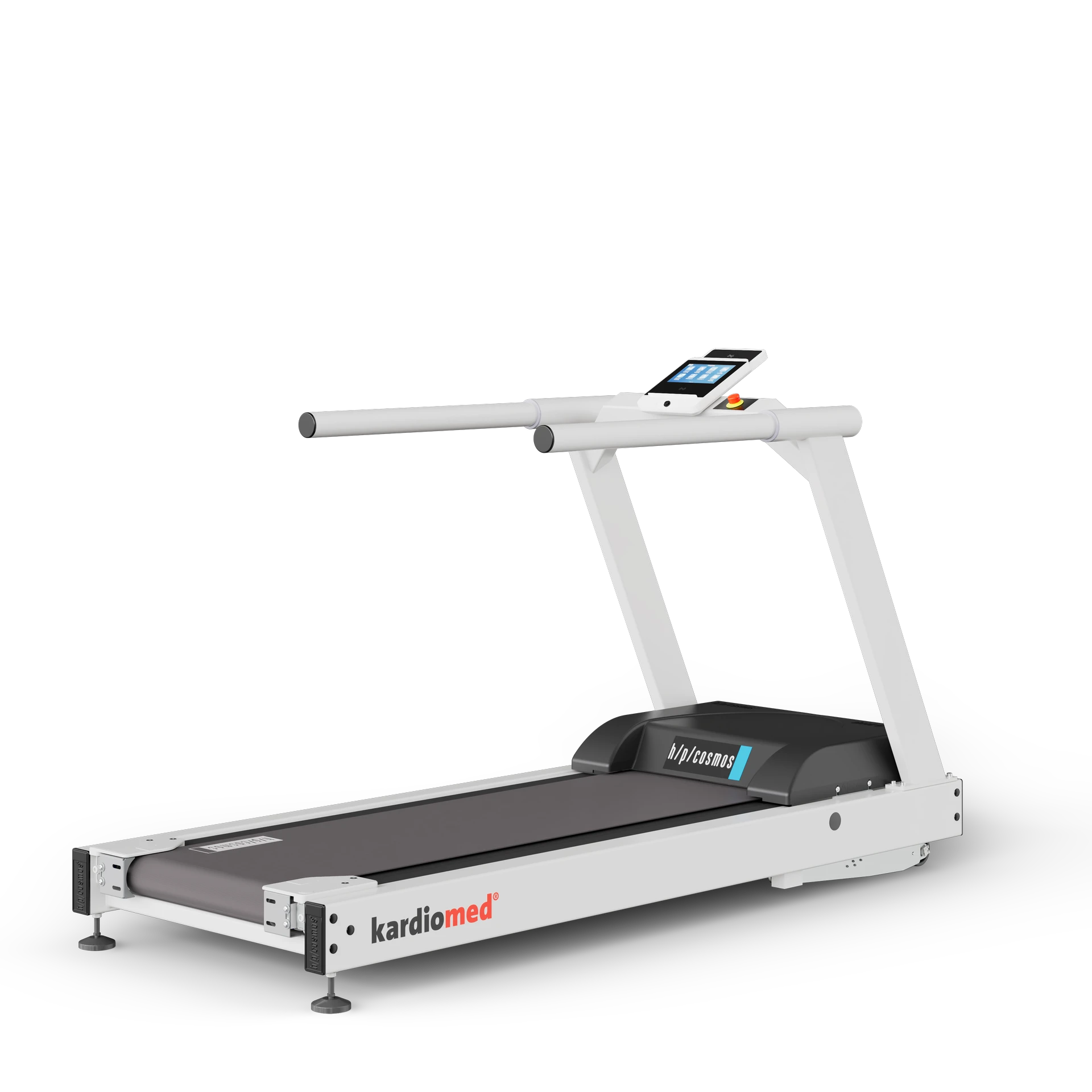
An early start to therapy, preferably in stroke units or intensive care units, and a high level of active repetition are key factors for success. Treadmills with safety support and assistance functions enable effective training even for severely impaired patients - with significantly higher step counts per session than with conventional handrail training. International guidelines explicitly recommend repetitive gait training, balance and coordination training as well as gait-oriented endurance and strength training.
Gait analysis also plays an important role in sport: movement analyses help to detect running injuries, prevent complaints and improve performance in a targeted manner. Objective measurement of stress patterns allows preventative measures to be taken at an early stage - whether in recreational or competitive sport.